
Data center
How a data center works
A data center keeps servers, storage and networking in one building with power, cooling and physical security. A site, email or app request arrives over the internet; network gear routes it to the right server, which answers, often in milliseconds. This page follows that chain at DGN in Bursa.
White space and the layers around it
Servers, storage and network gear sit in the white space, inside cabinets. Around that room are power, cooling, fire suppression and access control. If one layer stops, the room becomes an ordinary server closet.
At DGN those layers are in a purpose-built building. DGN PLUS hosts colocation and dedicated servers. DGN SELF is metered private space.
Servers, storage and in-hall network
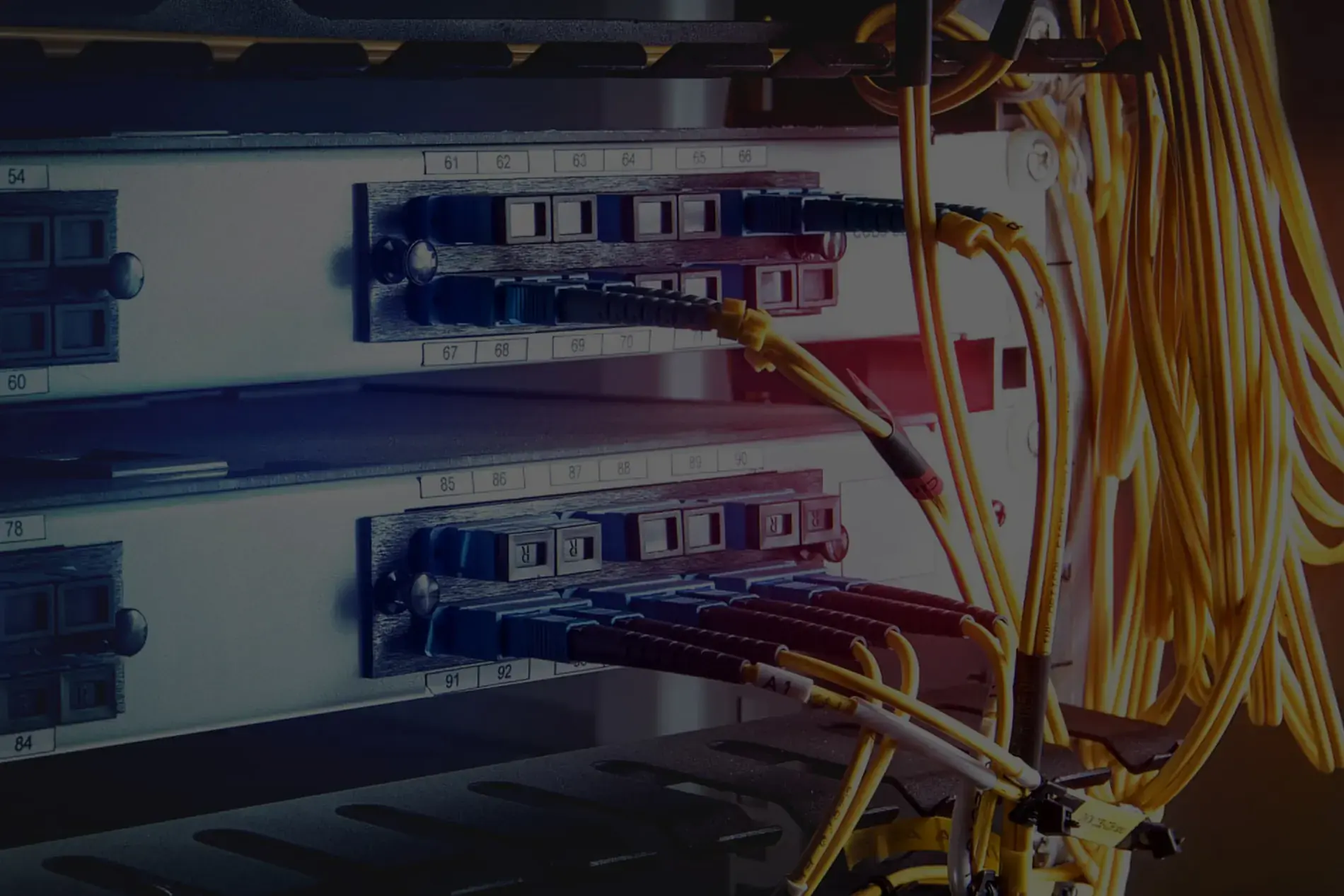
Workloads run on servers: websites, applications, databases and customer services. Storage sits on disk and SSD arrays; critical data is often written to more than one drive or backup layer to cut loss risk. Switches, routers and fiber carry traffic inside the hall and out to the world.
In colocation that gear belongs to the customer; on a dedicated server the hardware is DGN's. In both models cabinet, power, cooling and backbone meet in the same white space.
How power reaches the rack
Utility power arrives on a medium-voltage line, through a dedicated transformer, and into the UPS. The UPS covers the seconds between the grid and the generator and filters voltage swings. A diesel generator carries a long outage. Facilities lean on more than one power path so a backup can take over when a source drops.
At DGN, power arrives through a 1 MW transformer, with three 500 kVA diesel generators on standby. Two independent modular Huawei UPS systems are sized one step above design load; if a module fails, the load stays up and the swap is live. Battery strings are tracked and measured in real time; A-B power comes from these two plants.
Where the heat goes
A running server makes heat, so cooling runs as long as the load does. The usual layout feeds cold air at the front of the rack and lets hot air leave at the back. When the two streams do not mix, the same cooling does more work.
Equipment inlet temperature is often discussed in the 18-27°C band. That is not every facility's setpoint. Overheating damages gear, so hall climate control runs 24/7. DGN halls run continuous climate control; heat per cabinet is read together with amps and device density during a survey.
Physical security and fire
Servers and storage hold expensive gear and sensitive data. Layered access, cameras, magnetic-card gates and restricted zones, blocks unauthorized entry. Smoke and gas detectors watch the hall; gas suppression in the data hall stops a fire in seconds without damaging equipment.
At DGN, cameras record across the building. Entries use magnetic cards; NOC, data-hall and office access are logged under ISO/IEC 27001 processes. The data hall is protected with FM-200 gas fire suppression.
How traffic enters
A server connects to the hall backbone, and the backbone connects to carriers. A request is routed first to the right facility, then to the right server in the right cabinet. A single path dies with that carrier, so facilities use more than one carrier and separate physical routes.
DGN has Türk Telekom, Vodafone and Turkcell access on a Juniper backbone. International traffic is cleaned on a 2 Tbps node; only clean traffic enters Türkiye. Foreign reach can also be closed for a chosen IP.
What U and 42U mean
U is the vertical unit inside a cabinet. One U is about 4.45 cm. A 42U cabinet is about 187 cm of equipment height. Servers and switches mount to that standard.
At DGN a small footprint takes shared-cabinet U, a growing fleet takes a full 42U, and a customer who wants their own room takes caged space. You can stay in the same building from one U to private square meters.
How it all works together
When a user reaches a service, traffic arrives at the data center over carrier links. Network gear hands the packet to the right server; the server produces the reply. Power, cooling and security are built with redundancy so a failed part is replaced by a backup at once.
At DGN that means a Huawei UPS and standby generators, continuous climate control, FM-200 for fire, and magnetic-card access with camera recording. Operations run with 24/7 monitoring; scale grows in the same building from shared U to private square meters.
Short answers
What is white space?
The conditioned, access-controlled hall where servers and network gear run. Power rooms, generators and fire suppression sit around it.
What comes online first in an outage?
The UPS covers the short gap. The generator takes a long outage. The UPS keeps equipment up until the generator has the load.
How tall is 1U?
About 4.45 cm, or 1.75 inches. A 42U cabinet is 42 of those units.
What uses the most power?
In a typical data center, servers and the cooling that removes their heat lead consumption. Network, lighting and security also draw power. The billable line is cabinet amperage.
Why does physical security matter?
Servers and storage hold expensive gear and sensitive data. Cameras, magnetic-card access and restricted zones block unauthorized entry. At DGN, access is logged; fire response uses FM-200.
Why does a data center run 24/7?
Digital services take requests at night too. Redundant power, cooling and network aim to keep the reply path open if one part fails. At DGN, monitoring and response are built for that continuity.